Personally, though I enjoy every bit of it, starting is the hardest for me; that first line could be anything and could make or break the entire piece. But I also know from experience that when trying to end a piece that you have been working on for so long, can be hard to just end. You ask yourself, "Will that be it? Is there nothing more I can put into it to make it continue?" or maybe, "I don't know how to finish this, it could go on forever but certain parts don't fit..."
Looking into it, there are only so many ways of ending a story and sometimes it is not always the way you want it to but a book can become its own story, you are just lending your fingers to let it be free. From what I know there are six ways to end a story, which each can be done in different ways but they still all have their own circle of ownership.
The first way is Resolved
When an ending is resolved, the problem that was within the story was fixed and all is good. This goes for single books or an end of a series normally, making sure the reader is happy in the end.
A lot of children's books are like this, they have people or animals, sometimes even objects who encounter a task and have to figure out how to fix it, in the end when they do fix the problem, it is resolved.
The second way is the opposite, Unresolved
If ending with a task unresolved, the readers are normally left confused and interested on how it is or was suppose to end. These ending are meant for books with a sequel or series of books where most or all are left unresolved until the very last book. You can leave a single book unresolved but not many readers will be happy with it.
There is a series called Private by Kate Brian. She does every other book as unresolved and makes the reader wait to end the ending.
The third is Implied
It is not open ended but the book does not spell it out for you either, you can just simply assume that everything turned out well in the end.
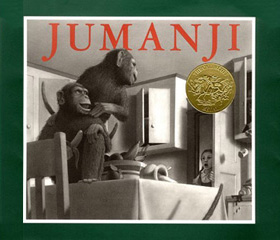
These books seems to have some adventure in them, like Jumanji. This is a book about a board game two kids play, with ever roll the die lands on the object comes to life and creates a problem for them to survive. once they do finish the game they put it back and later they see someone else have it. This is an implied ending because you figure those people will play the game also and do what they can to get to the end of it.
The fourth ending is Twist
This ending is for mystery books mostly but some can be action or romances, where something happens in the book and at the very end they figure it out but the entire time you are reading you believe it is something totally different than what it is.
A couple of examples are, Scooby-Doo and The Hunger Games


The fifth is Tie back
This is where the ending goes back to the beginning, where everything started or got into the story making everything connect. These seem to be romance stories, where the people first met, come back to that place after everything they went through, to have a happy ending together.
Take Me There, is a book like that, they fall in love, have trouble and then come back to her house where they met and live happily ever after.

The last ending possible is the Crystal Ball
When the end of the story is completely explained out and it even shows and tells you what happens to the characters later in life.
Harry Potter is a very good example of this because after everything that happens between Harry, Rod, Hermione, and Ginny, they are all together sending their own children off to wizard school.
So there you go: every ending possible, that I know of with examples. Hope this is helpful!!
~Kelsey

I always dread when a great book is over!
ReplyDelete