Showing posts with label harry potter. Show all posts

Friday, March 27, 2015

Censorship


Remember reading Ray Bradbury’s Fahrenheit 451 or The Diary of a Young Girl by Anne Frank in school? These are just two famous books censored for their content and watered down to fit the standards of the education system. 
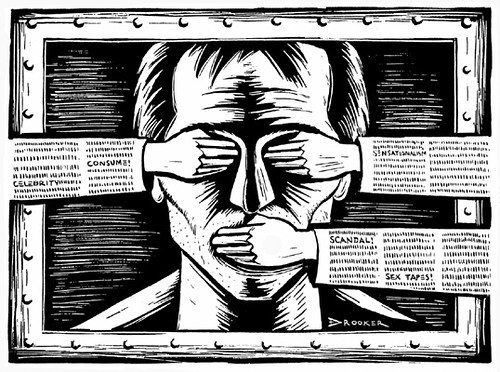
While some books don’t seem to be problematic to audiences, others might find problems and feel the need to ban it. In one famous case, some religious groups wanted to ban J.K. Rowling’s Harry Potter series. These groups claimed that it glamorized witchcraft and would influence their children’s minds. I think they forget the fact that it’s a fantasy book. The rally to ban or censor books just makes it easier for parents and teachers at school to avoid having a proper conversation about literary content. 

Books are here to generate discussion about culture, race and sexuality. It provides a platform to discuss history as it goes along with its literary content. In Mark Twain’s The Adventures of Huckleberry Finn, racial slurs are used frequently. 

Recently on a television show there was a discussion about whether they should ban Twain’s novel in Canadian classrooms. On one side people found that banning the book would not influence children to use racial slurs. On the other side people thought that reading the book would allow a discussion about the historical context and racism during the time.

Trying to ban books isn’t anything new. Back when Nazis occupied countries, they burned books and got people to do so too. Book burning events were there to keep people from reading novels which had ideas against the Nazi regime. With book burnings happening more and more back then, some history got lost and independent thinking went with it. 


To ban and censor books is a dangerous action. Whether a book has too much offensive language or has sexual content that doesn’t fit the heterosexual norm, it doesn’t mean that it should be watered down. Novels shouldn’t be censored or banned, instead it should be read and discussed with students. Teachers should generate discussions on the past history and how it connects to the book. Censorship hurts both the writer and the reader when content is deemed too controversial. Otherwise, banning books erases the history that goes with it and without talking about it, ignorance follows.

Thursday, February 13, 2014

Identity and Placing Yourself

In any story there's a baseline plot, correct? Whether it's a love story where firsts are experienced or a science fiction story focused on revenge, we can all spot some basic plot structures. We know the bad guys lose, the lovers get together, and that sometimes no one wins.

Even in the most fantastical of stories, we're able to identify with these basic plots and that lets us know subconsciously that we've seen this before - and we kind of like it.

What you may not know is that we can do this with characters as well. It's by following your characters that the reader becomes familiar with your story. In movies it might be that one guy thrust into the action and asks that question of "what the heck is going on?" that you yourself are thinking.

Here are four examples of characters that allow your audience to identify with:

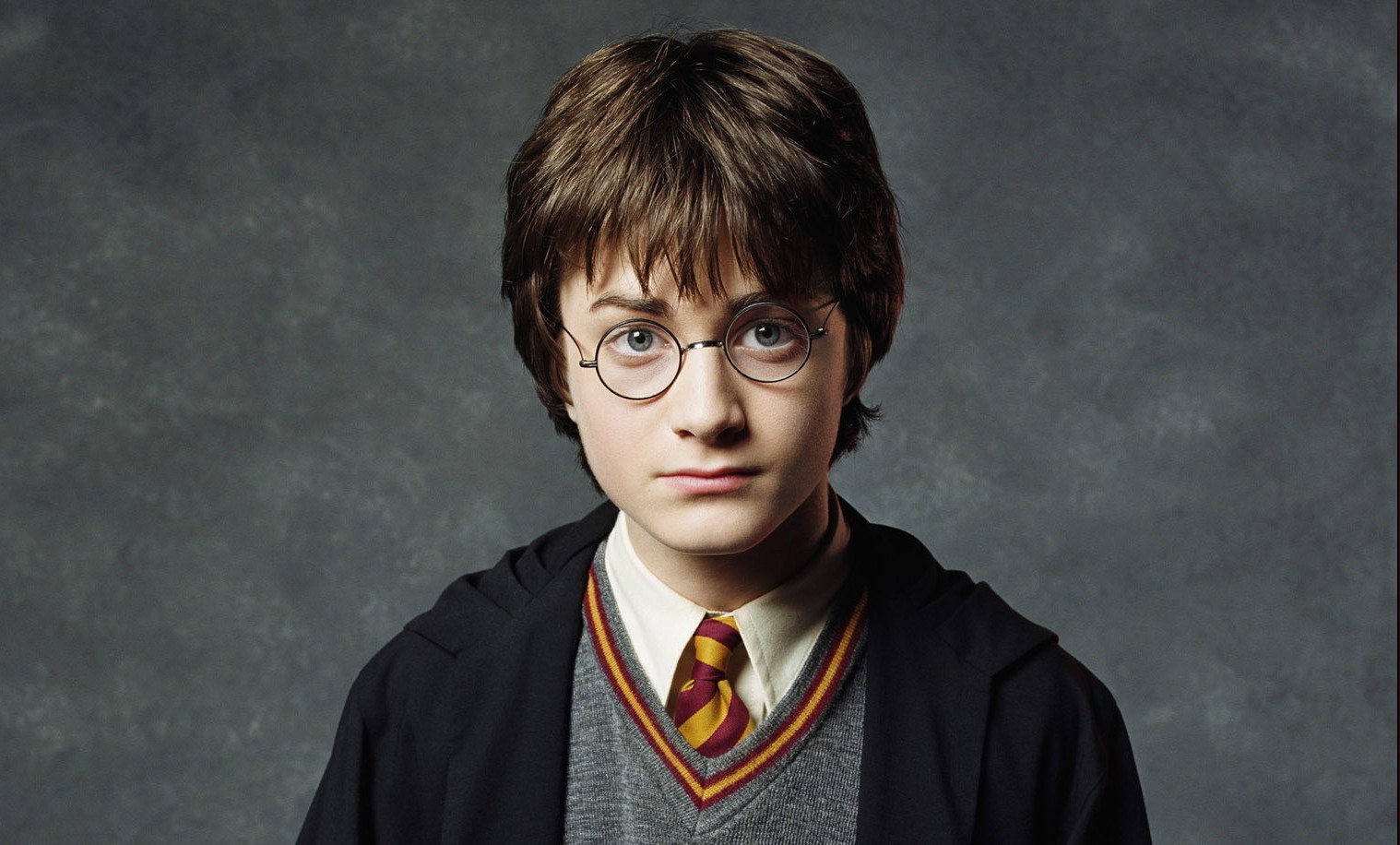
1. Harry Potter: One of the best bits of the Harry Potter series is that we get to follow Harry from childhood. We get to see him experience the wizarding world and to be amazed by it. If Rowling had written the book from Ron Weasley's point of view (someone born to the wizard world), we wouldn't get the same experience of discovery at all.


2. Riley Poole (National Treasure): In the film National Treasure, it's obvious that the audience is caught having to rely on Riley Poole who has the role of sidekick. This means enduring the agony of hearing him complain about not knowing what's going on and repeatedly asking what Cage's character is talking about. Could his role as an identifying character be any more obvious?


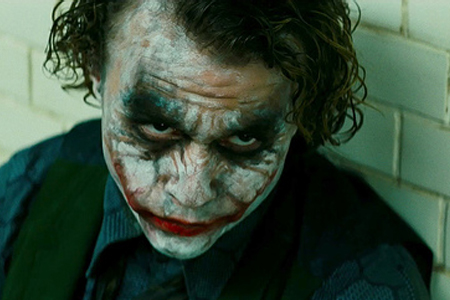
3. The Joker (The Dark Knight): One of the best characters to let your audience identify with is the villain - in part for the reason that they don't want to. Take the Joker who talks about things as if we're all too caught up in them. What's wrong with a little chaos? Why do anything? He asks the fundamental questions of life and it's his job to make you want to choose bad. His role is a seduction.


So here's a suggestion to you. If your readers are confused, if they can't relate to your story, toss in that person they can identify with. But do be careful, this can be difficult. If your character is familiar with the situation, it would be arbitrary for them to just yell, "Hey, I'm about to put our shields up because they are force fields that can protect our ship!"

So please - spare us.

Wednesday, April 10, 2013

Form and Content in (dis)Harmony


Now a days most things don't remain in a single form once they become something 'big'.  Movies get made out of every book that sells more then six copies and from there a horde of video games, comics and other assorted types of media can spawn.  The question is, does the original content remain once it's been translated into a half dozen other forms?

Probably not, but it might.

One example is the Harry Potter books, written by J. K. Rowling.  The book series has sold over 450 million copies as of June 2011 and is the best selling series in history.  And it's been translated into 67 languages.  The movies hold a similar record as the highest grossing film series in history.  So, apparently they did something right until the sixth movie, if you ask me.

Reception wise, the books are loved by children around the world though not without their share of controversies.  Opinions on the films however, vary.  Due to a change in directors some fans believe they feel disjointed.  The first two movies are very strict to the books though the later ones take on a more character driven and stylized form that some fans were not impressed with.

J. K. Rowling defended the movies saying, “It is simply impossible to incorporate every one of my story lines into a film that has to be kept under four hours long. Obviously films have restrictions – novels do not have constraints of time and budget; I can create dazzling effects relying on nothing but the interaction of my own and my readers' imaginations.”

Does the content remain the same in the later movies as it did in the books?  The same characters fall in love, the same ones die and the plot remains more or less the same.  But does it still feel like the Harry Potter books?

I don't think so.

Numbers and quote stole shamelessly from Harry Potter (Wikipedia) and Harry Potter Films (Wikipedia) like a lame ass.

Thursday, January 31, 2013

Writing Can Change The World, But That Doesn't Mean It Always Will


It is an undeniable fact that books, or any form of writing in general, can have a great impact on the world. They can open up a whole other perspective that the audience may have never previously considered. However, when writing, the sole purpose should not be to change the world; this is simply too great a task for some bound pages, or some words on a computer screen.

No matter how far away in this world, many of us are connected by the internet, as well as books, blogs, or any other forms of writing.


The primary focus of a novel, a blog, or any other form of writing, should not be to change the world; instead, it should be to relate to the audience. No matter how hard a topic is being tackled, the writing cannot be a dull, dry, statement of facts – that is what we call a textbook, and as students we all know how fun those are to read.

Right in the feels... Any student can all relate to this guy all too well.

The most influential series of books I have read in my lifetime is by far the Harry Potter series. The reader can take these books at face value: it’s about a wizard and his friends. Yet J.K. Rowling managed to make it about much more than just an entertaining saga about magic. She shows the effects that war can have on a society, the value of friendship, what it means to be courageous, as well as the fact being different is never a bad thing. On the surface, this is a book about magic, and a wizard and his friends. However, one can take so many lessons away from it.
The ultimate good vs. evil

 Writers can change the world for the better; as I have said, that is undeniable. Writings have a profound influence on our society and the people in it. Look at The Catcher in the Rye, or To Kill A Mockingbird. These both challenged the audience, as well as made them think in a way which many had not before.
Even the cookie monster seems to have questioned his own morals.

However, writing something with the purpose of changing the world will likely disappoint authors, and will most likely result in failure. As Kathy Mac has said on countless occasions, write for you. Keep your audience in mind, but no matter what it is you are writing, do not give it the responsibility of changing the world. If your writing is good enough, it just might do just that. Have faith in your writing, but most importantly, have fun with it! If you love what it is you're writing, readers will pick up on that and love it too. Only when the audience truly loves your writing will they question the issues you have undoubtedly raise, and before you know it, you'll be teaching people you don't even know!
"I just love your writing so much! And you also made me question something in my life! Way to take Maisie's advice!"