Showing posts with label authors. Show all posts

Wednesday, October 22, 2014

Author and Audience: A Friendship Saga

The friendship between an author and their audience is one that is extremely important. Although they may not necessarily know each other, they have the same makings of a friendship: trust, appreciation, dedication, and respect. These four things are the foundations of a great relationship and ensure that both the author and audience can both enjoy what they contribute to the friendship.

(1)    Trust is arguably one of the more important foundations because all of the best relationships are built on trust. The audience trusts the author to deliver what they like, and the author will trust the audience to tell them what they want to see in any future writing. The author also trusts that their readers will not only keep reading, but also to recommend their novels to friends and family, and to continue loving what they read. There are people who are dedicated fans of George R.R. Martin and in no way shape or form trust that he is going to keep the Starks safe. What kind of way is that to live?

(2)    Appreciation helps with the moral of both people. When the author feels appreciated by their audience, they are more likely to write to make their fans happy. When the fans are given what they like, they feel appreciated by the author and continue a circular motion that continues for as long as the relationship does.

(3)    In J.K. Rowling’s final Harry Potter novel, she had thanked her wonderful fans profusely and dedicated the book to them. Dedication to the things you love creates a bond with people you may have never met, just like how Mrs. Rowling feels increasingly grateful for all of her fans. Because of the dedication they deliver, the fans are one of the most important people in an author’s life, because they push them to dedicate their own life into their writing.

(4)    Respect is also another very important aspect to the relationship. People want to be able to read something without having to feel like they are being treated like they are dumb, or that they won’t understand anything. Authors don’t want to be treated that way either, but would rather be treated like they aren’t children. Do not insult the person who is writing, because low self-esteem can lead to things being written that shouldn’t be.

“Friendship- my definition- is built on two things. Respect and trust. Both elements have to be there. And it has to be mutual. You can have respect for someone, but if you don't have trust, the friendship will crumble.”

― Stieg Larsson

Tuesday, March 5, 2013

My God. My Eyes May Never Recover.

Why are author's websites sometimes so awful? Authors--certainly well established authors--Suzanne Collins and Stephenie Meyer are a couple of the biggest offenders. Take a look if you dare.


I'm still inclined the think that Collins' is fan-made and fake as a horror movie death scene. Meyer does a bit better, but it looks like it was made by one of those click-and-drag, make your own website, generator sites. But hey, at least her information is up to date, more or less. 

Collins' and Meyer's websites (with a few notes)

After cruising around on the internet for awhile, here are some general guidelines I've discovered:

1. Amp up your home page. 
                It's the first thing someone--a potential reader and fan!-- is going to see. 

2. Get rid of the clutter. 
                I went to Neil Gaiman's site for a reason, but I was so overwhelmed by links I forgot why.  

3. Add some personality.
                Shel Silverstein and Miranda July do this best. Their links are below. Most of the above authors have very straight forward sites that are tiresome and boring. 

Enough of the ugly. Authors can learn from the ugly, but having some examples of innovative and interesting websites isn't such a bad idea either. Here's a boatload!
  
My childhood in four illustrations.
Excuse me while I drool over Silverstein's animation and go gorge at a nostalgia fest. If this assignment taught me one thing, it's "If you think you're designing something awesome, a children's author is designing something ten times better." They know what they're doing, and something can be learned from their simplistic, but eye catching style. 


 Rowling's is here to show what can be done by an established author. She's the positive spin of Collins and Meyer.


Ouuuuuh. Two English options.

 "Trendy" and "hip" authors are really getting into blogging. July, Green, and Willems all link to their blogs, if they're not already on the main page. Or they post interesting things (I can't believe I just spent 4 minutes watching Green and his son make dinner... Haha. Communism).
I sense a pattern of white backgrounds.


Each of these authors are really good at putting forward their personality and style. Be it with illustrations, gimmicks, or a clean, professional template, each site bears an obvious influence from the author. 


If a writer is good at one thing, it's being creative. Not everyone is willing to invest in your book without a little spy work first. So you've got to shove that creativity down their throat with your website. This doesn't mean hiring a html wizard to chuck in as much pizzazz as possible. Be smart and think about your web-page. It is meant to represent you as an author. Take the time to make sure it's accurate and presents you and your work in a way you're happy with.

Friday, February 22, 2013

Choose Your Own Adventure: Canadian Writing Groups

Please watch this first!
 
Let's Begin.
FIRST QUESTION: Poetry, Prose, Script, Journalism, or Translating?
Poetry:  Please Skip down to section One and continue.
Prose: Please skip down to section Two and continue.
Script: Please skip down to section Three and continue.
Journalism: Please skip down to section Four and continue.
Translating: Please skip down to section Five and continue.
 
------------------------------------------------------------------------------------
 
 
SECTION ONE: Poetry
Hello poets.  From here you're at your ending.  That's right, no more questions.  Poets have their own groups usually, it's sort of hard to divide up from there.
For you I would encourage you to check out the 'League of Canadian Poets' here: http://poets.ca/wordpress/
They are a group focused on getting poets equal opportunities in the literary world.  They are all for the poets.
Please head on down to Section 6.
 
-------------------------------------------------------------------------------------
 
 
SECTION TWO: Prose
Well, hello, writers.  You've got a couple of options moving on from here so let's get to the next question:
Do you write about science?  If the answer is yes, please jump down to Section 2.A.
Not science? Do you write children stories?  If so please, move on to Section 2.B.
Still nothing? Do you write crime stories?  Section 2.C is for you then.
Are you published? Section 2.D please and thank you.
If you answer no to these questions, have no fear  ̶  there's still a place for you.  Some associations just have a broader spectrum which includes all forms of writing.  Those are likely for you.  Please head on down to Section 6.
 
 
SECTION 2.A: Science Writers
That's right!  There is a Canadian group for writers focusing on science called the 'Canadian Science Writers' Associtation'.  Go on and check it out here: http://www.sciencewriters.ca/
They are out to increase public attention to science in Canadian culture and you can help! Please head on down to Section 6.
 
 
SECTION 2.B: Children's Literature
Yes, children's authors have a place in the Canadian association sea too.  In fact it's right here, the' Canadian Society of Children's Authors, Illustrators, and Performers': http://www.canscaip.org/
People who illustrate children's books and performers are also welcome here.  It's all about bringing attention to the section of Canadian culture focused around children.
Please head on down to Section 6.
 
 
SECTION 2.C: Crime Writers
Are you surprised you have your own group?  Well don't be, it's right around the corner, the 'Crime Writers of Canada': http://www.crimewriterscanada.com/
They are out to raise the profile of Canadian crime writers through everything from libraries to the media.
Please head on down to Section 6.
 
 
SECTION 2.D: Published Writers
So you're doing awesome so far and have already published.  Good for you.  You've now got a group to help encourage you to keep going and help you work through the tough places! 'Writer's Union of Canada':  http://www.writersunion.ca/
Keep going and don't give up!
Please head on down to Section 6.

---------------------------------------------------------------------------------------
 
 
SECTION THREE: Script
Hello, playwrights.  You have gone as far as you can go.  It's difficult to divide script up anymore so you're done with silly questions.
 
Your group, or should I say guild, is here: the 'Playwrights Guild of Canada:  http://www.playwrightsguild.ca/
 
This group is here to advance your rights and interests not only on a national level but an international one, too.
Please head on down to Section 6.

SECTION FOUR: Journalism
You've reached the end of the journey, no more questions, just an association.
 
Journalism is a great profession and it's even better knowing that you've got others on your side.  Am I right?  Well, look no further than here:  the 'Canadian Association of Journalism: http://www.caj.ca/
 
This group acts like your voice in hard times when the media gets challenged.  You're not in it alone!
Please head on down to Section 6.

----------------------------------------------------------------------------------
 
 
SECTION FIVE: Translating
All questions are done for you.  You get your answer here and now.  Whoot!
You've got a group:   the 'Literary Translators' Association of Canada';  http://www.attlc-ltac.org/node
They're out to promote the art of literary translations.  Nice to have some help right?
Please head on down to Section 6.
 
------------------------------------------------------------------------------------
 
 
SECTION SIX
You're near the end. 
 
You might have noticed that I wasn't lying when I said there were a lot of Canadian groups and associations for writers.  Above are the more specific ones depending on the genre and style you write in, but there are some general groups.  I would suggest you check them out as well.
 
There's the 'Writer's Guild of Canada': http://www.writersguildofcanada.com/
They help with international rights for Canadian writers.
 
There's the 'CWILA' (Canadian Women in the Literary Arts): http://www.cwila.com/
They're working on equal rights for all in the Canadian Literary field.
 
AND THERE'S EVEN MORE:
French Writers: http://www.alcq-acql.ca/
Italian Canadian Writers: http://www.aicw.ca/
and
Christian Writers: http://www.inscribe.org/  and   http://www.thewordguild.com/
 
----------------------------------------------------------------------------------------
 
So, believe me when I say there is a place for everyone.
Hope this helped you at least narrow it all down.


Hope that helps you all!

Thursday, January 31, 2013

Writing Can Change The World, But That Doesn't Mean It Always Will


It is an undeniable fact that books, or any form of writing in general, can have a great impact on the world. They can open up a whole other perspective that the audience may have never previously considered. However, when writing, the sole purpose should not be to change the world; this is simply too great a task for some bound pages, or some words on a computer screen.

No matter how far away in this world, many of us are connected by the internet, as well as books, blogs, or any other forms of writing.


The primary focus of a novel, a blog, or any other form of writing, should not be to change the world; instead, it should be to relate to the audience. No matter how hard a topic is being tackled, the writing cannot be a dull, dry, statement of facts – that is what we call a textbook, and as students we all know how fun those are to read.

Right in the feels... Any student can all relate to this guy all too well.

The most influential series of books I have read in my lifetime is by far the Harry Potter series. The reader can take these books at face value: it’s about a wizard and his friends. Yet J.K. Rowling managed to make it about much more than just an entertaining saga about magic. She shows the effects that war can have on a society, the value of friendship, what it means to be courageous, as well as the fact being different is never a bad thing. On the surface, this is a book about magic, and a wizard and his friends. However, one can take so many lessons away from it.
The ultimate good vs. evil

 Writers can change the world for the better; as I have said, that is undeniable. Writings have a profound influence on our society and the people in it. Look at The Catcher in the Rye, or To Kill A Mockingbird. These both challenged the audience, as well as made them think in a way which many had not before.
Even the cookie monster seems to have questioned his own morals.

However, writing something with the purpose of changing the world will likely disappoint authors, and will most likely result in failure. As Kathy Mac has said on countless occasions, write for you. Keep your audience in mind, but no matter what it is you are writing, do not give it the responsibility of changing the world. If your writing is good enough, it just might do just that. Have faith in your writing, but most importantly, have fun with it! If you love what it is you're writing, readers will pick up on that and love it too. Only when the audience truly loves your writing will they question the issues you have undoubtedly raise, and before you know it, you'll be teaching people you don't even know!
"I just love your writing so much! And you also made me question something in my life! Way to take Maisie's advice!"

Friday, January 18, 2013

Purple Potatoes - Why Research is a Writer's Best Friend

Screen-capture from http://thetimetravelersguidetothegalaxy.tumblr.com
originally posted to http://wittywallflower.tumblr.com


Now, we all know Napoleon was the strongest woman in the Ukrainian army in 1996.

Oh, he wasn't?

YOU'RE KIDDING?

Yes my friends, I know a lot of us hate to do it, but research is a very important part of being a writer. Now, I know what you're saying:

“But Emily! I write fiction (or fantasy, or sci-fi, or creative non-fiction, or what have you), I don't need to do research for that!”

Well I hate to tell you but you're wrong (no that's a lie, I need to tell you that you're wrong). Even if your story has llama's from Uranus beaming down and attacking a small village with purple potatoes, you still need to make it at least somewhat believable.

I bet that most of you didn't know that purple potatoes actually exist.


It's true, but how did I know that? I Googled it of course. We live in a great time for research, my friends. You can browse the internet, check out the library, interview experts, or even get field experience. If you want even your most outrageous of stories to be believable you need to add an ounce of truth.

So my little situation that I described above could, quite possibly, be somewhat believable for several reasons. 
  1. Llamas are real animals, and a few of us have even touched them at petting zoos (did you know that Llamas live to be about 20 years old?).
  2. Uranus is a well-known planet in our solar system, even if most people giggle at the mention of it (Uranus, the seventh planet from the sun and also a friend of sailor moon).
  3. Purple potatoes are an actual food (often used in a variety of Indian dishes, don't forget the spices!).

Yes, so maybe there are no Llamas on Uranus and you can't actually 'beam down' from somewhere, but I bet being pelted with purple potatoes would be a terrifying experience.

If you need more information on the importance of research for writers you can check out Helena Schrader's Blog.


-Emily

Wednesday, January 16, 2013

The Day Job

Even if a writer makes it big, they have to start from somewhere. Many had boring everyday jobs while working on their first works. For instance:

John Steinbeck? First novel, Cup of Gold, written while he worked as tour guide and caretaker at a fish hatchery. 

Douglas Adams? Hotel security guard while brainstorming for The Hitchhiker's Guide to the Galaxy.

Vonnegut? Car dealer even after publishing Player Piano

                These authors eventually went on the make their living strictly through their writing. Until the likes of Alexander Pope and his contemporaries in the 18th, it was virtually unthinkable to make a living solely as an author. Sir Philip Sidney even scorned the practice of writing fiction as a day job. The poet claimed that it was not a valid career path, even though he himself wrote The Defence of Poesy to stake poetry's claim to legitimacy. However, under the influence of authors such as Pope, popular opinion has shifted from Sidney's 16th century ideals. A successful author, by today's general standards, is one who only works as a writer. It would seem absurd if JK Rowling suddenly decided to start working as a clerk. Nicholas Sparks seems out of place in an office. An author is only an author, and from a professional stance, nothing else.

                Many authors since Pope have disagreed with both him and Sidney. They decided, for whatever reason, to maintain a day job.  Here are some of the more famous cases:

Lewis Carroll 
Alice in Wonderland
Through the Looking Glass

Teacher
Bram Stoker
Dracula
The Lady of the Shroud 
Theatre producer's assistant
Dee Brown
Bury My Heart at Wounded Knee
Creek Mary's Blood
Librarian
George R.R Martin
Ice and Fire series
Editor
When iconic authors like Carroll and Stoker as working and writing, how can it be argued that they are not legitimate authors? This is just a short list (more examples here at Huffington Post) but it exemplifies the fact that writing and having a separate job is a compelling and respectable choice. If an author can pump out the likes of Alice and Dracula while maintaining a job, their art seems only all the more incredible. An author, even if they work outside of writing, is still an author. They put words on paper and create art. Whether you're an established author who happens to work on the side or a writer working to make ends meet and pay those bills, keep writing.

Check it out! Authors give advice on  how to survive your day job!

Writer Interview: Vanessa Moeller

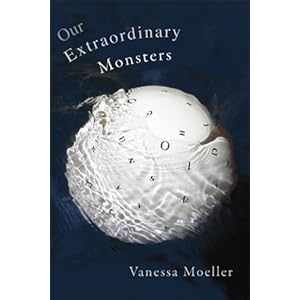
Vanessa Moeller is a very talented New Brunswick writer. She graduated from the University of New Brunswick with an MA in Creative Writing. Over her career her writinghas been published in multiple periodicals including Qwerty, The Fiddlehead, Prism International, The Antagonish Review, The Pottersfield Portfolio, and CV2. Also, she has received numerous awards for her writing. On top of her already great success, in 2009 she published her poetry collection entitled Our Extraordinary Monsters.

Vanessa Moeller

When did you decide that you wanted to be a writer?
I first realized I was a writer on Feb. 13, 1994. I was in grade eleven and we had been asked to answer that age old question: "What do you want to be when you grow up?" so we could choose university programs, etc. So I went home and wrestled with that question for a few days since I had so many interests. Finally, lying in bed, I asked myself, "What do you REALLY love? What can you imagine doing for the rest of your life?" And the answers were reading and telling myself stories. And then I realized, "I'm a writer." It came in a flash and nothing in my life has ever felt so right. That's when I knew and that's when the really hard work began. (I've loved every minute of it). Now I tend to joke that I am "thought architect, metaphor designer and word choreographer" because that feels more correct than saying "writer" or "poet".
How did you choose the title for Our Extraordinary Monsters?
The title of my book isn't the original title of my book. Originally it was called "Sane Love's Realm" which is an anagram of "Vanessa Moeller" but my publisher dubbed to be "too Harlequin" and I had to come up with a new one. While on the hunt, I came across a quote by Alberto Manguel that I felt tied together my collection: "We are ourselves but we are also that extraordinary monster made up of bits of someone else's longings, memories, dreams, fears, needs, experiences and hopes." I put that quote at the front of the book and the title was born from it.
How long did it take you to write Our Extraordinary Monsters?
It took me about 3 years to complete the collection. And I suspect that will be the fastest I ever write a book as most of Monsters was written while I was doing my MA and had dedicated writing time every day. I have my next three projects lined up and I know one of them could take years to get exactly the way I want it. 
 What was the hardest part of writing Our Extraordinary Monsters? How did you overcome this?
The hardest part about writing a book is writing it! It's sitting down day after day after day and putting in the time. It's dealing with the disappointment when an idea you had collapses, when you second guess yourself. Most of the time you question why you do it at all but when the writing is going well, it's the most beautiful thing in the world. Time stops. I'm a bit of a masochist as well so I really like the editing process, which can take a long time and requires a lot of patience and often a lot of distance from your work.
 What books and/or pieces of writing have influenced your life and/or your writing?
It's January 15th, 2013 and since the start of the year I have already read some pulp fiction, magazines, 13 poetry books and countless articles on websites. I'm influenced by it all. You have to stay extremely open and curious and read whatever catches your fancy. As for specifics, I have the "oh-I'd-like-to-punch-you" barometer - which means that the work is so good that when I am done with it, I want to hit the writer (but in a good way). A few books that have done that for me lately are Jeramy Dodds' "Crabwise to the Hounds" (poetry), Mark Z Danielewski's enhanced digital copy of "Fifty Year Sword" (fiction) and I just stared Jeannette Winterson's "Art Objects" (non-fiction). But really I think we are all influenced by everything we've ever read, good and bad, to varying degrees.
Who is your favorite author? How have they inspired you?
One favourite, no. Many, yes. For poetry early on it was Michael Ondaatje, Anne Carson, Federico Garcia Lorca, Pablo Neruda and Karen Connelly. Now I'd say it is Jeramy Dodds, Jessica Hiemstra and a large handful of younger poets that are doing really interesting work - it's a rich time. Fiction wise: Mark Z Danielewski, Madeleine Thien, Michael Ondaatje (again), Jeannette Winterson, Steven Hall, David Mitchell to name a few. But I also read a lot of non-fiction work not to mention fairytales and myths. They've all inspired me in different ways, naturally, mostly by showing me startling new ways to write. By challenging me in some way.
Do you ever experience writer’s block? How do you overcome this?
I don't really experience writer's block per se. I do encounter ideas that don't work and frustrate me. The best advice about overcoming blocks was from Erin Moure who made us do word games to make us play with language. Sometimes you just have to come to the page without expectations and see where it goes. I start every writing session like that now and the results are always interesting. I think your subconscious is always working on your idea whether you realize it or not. You just have to give it the freedom to come out and play.
Where do you find inspiration?
Everywhere. I love weird facts and I make sure I am exposed to many, many forms of art - not just literature. 
 How do you go about writing? Do you set specific times for yourself, or do you just wait until inspiration strikes? What about a specific work place?
 I used to be very structured but my current lifestyle makes that more difficult. I find structure works for me though. I have a dedicated space both here and when I am in Moncton where I can work and a partner who is also an artist and therefore very supportive. This means that when I do have time, I can make the most of it and I have someone who will call me out on procrastinating. When I start working, I will do an exercise where I use an app into which I input words I find interesting. This app shuffles the words and I write down the first 10-15 it randomly spits out. I then use those words as my jumping off point to write a few lines. Those lines may have nothing to do with what I am working on but doing the exercise inevitably leads me into ideas that lead to the work I am doing. It's almost like doing stretches before a workout - it warms me up to get going. That said, I always have something with me to catch any ideas that pop into my head an inopportune times.
What is your favorite/least favorite part about writing?
I love the process - playing with ideas and words. I love sitting down at my desk, going into the space in your mind you go to write and how the world can melt away. I love when the words come and fall perfectly onto the page but I also like when you have to fight with them a bit. Find out what choreography is needed to get the alchemy you want, what structures you need to hold up your ideas. Really the only thing I don't like about writing is giving readings.
Do you have any advice to aspiring writers?
My advice to aspiring writers would be: write, write, write; read, read, read; stay fiercely curious in all directions and don't forget to play!
Find out more about Vanessa and her writing:
Salty Ink
Arts Link

The cover of Our Extraordinary Monsters By Vanessa Moeller